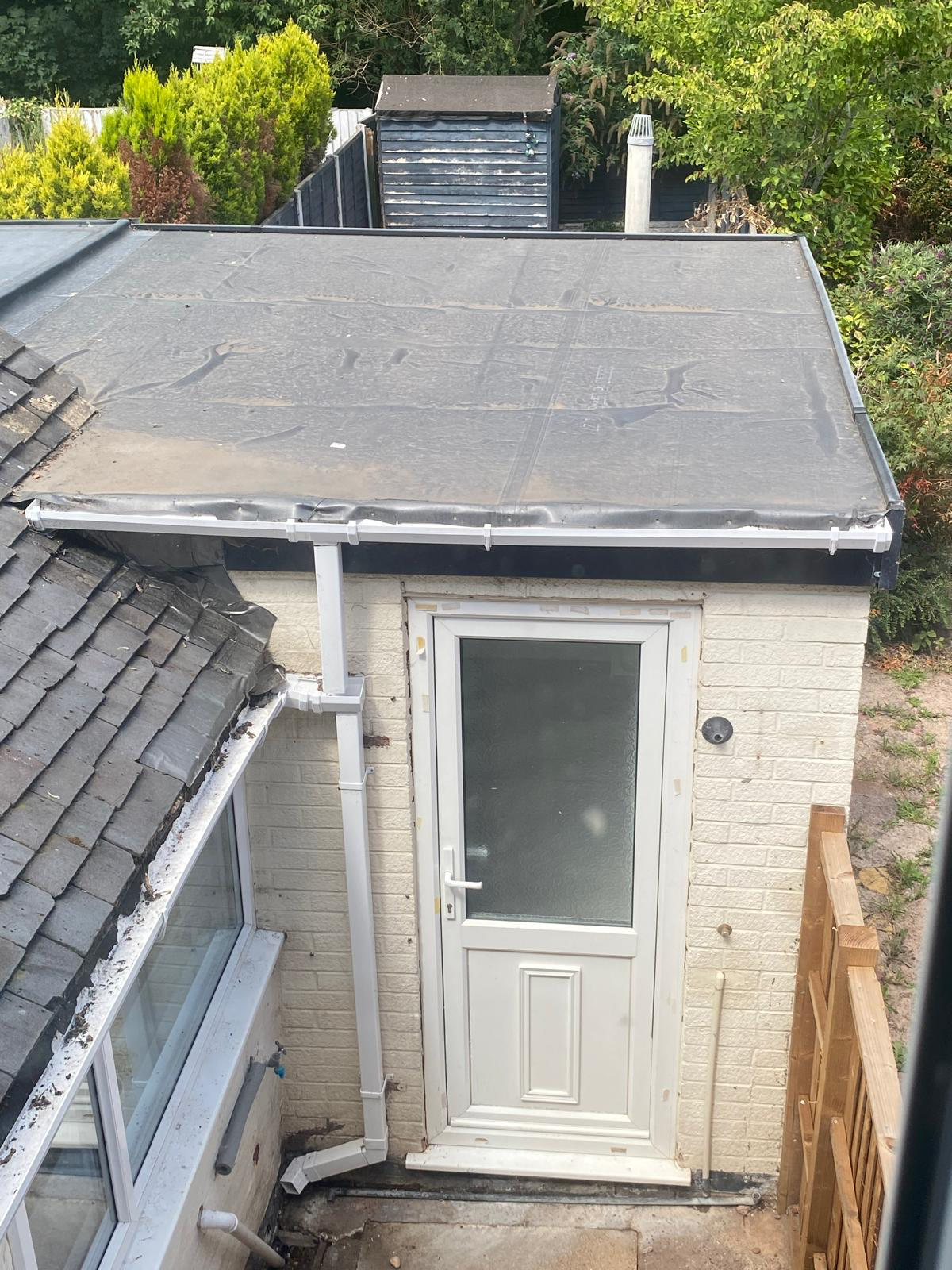

Damp: what it actually means, and why it matters
Few things unsettle a buyer faster than seeing "damp" in a survey report. In reality, damp is just a symptom - excess moisture that shouldn't be there. It can come from very different sources, and knowing the cause makes all the difference to how serious it is and how to fix it. RICS reminds us that solving a damp problem always starts with finding where the moisture is coming from.
Penetrating damp
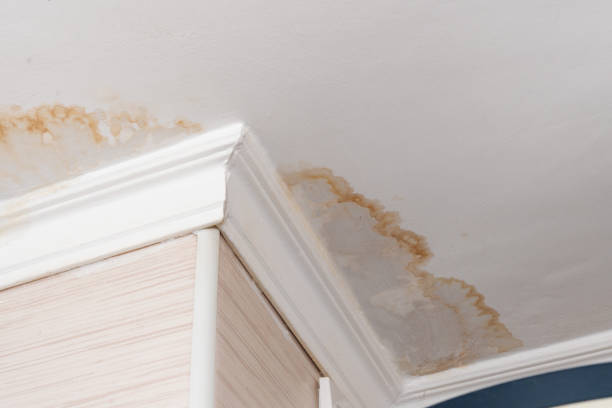
Penetrating damp occurs when rainwater or ground water leaks from the outside into the building fabric. Common entry points include:
- Broken roof tiles or failed flashing that let rainwater in.
- Cracked or poorly pointed brick or stonework.
- Blocked, overflowing or leaking gutters and downpipes spilling water onto walls.
- Gaps around windows, doors or foundations, such as missing sealant or perished mortar.
These problems typically show up as localised damp patches on walls or ceilings, often growing larger after rain and then drying back in warm, dry weather.
For example, a spongy damp stain under a leaking gutter or along a cracked chimney breast is usually penetrating damp.
In most cases, fixing the defect, such as repairing the gutter, pointing or flashing, will stop the leak and allow the affected area to dry out. RICS specifically advises checking external causes like gutters, roof flashings and wall cracks first.
Once the entry point is sealed, expensive chemical injections are rarely needed.
Rising damp
Rising damp refers to moisture that travels up through walls by capillary action, as if a wall is acting like a sponge in a puddle. It is usually described as moisture moving upward from the ground, leaving a "tide mark" on walls.
Classic signs are a damp band on the lower part of an internal wall, typically up to about 1 metre high, and white, powdery salts on the plaster or skirting board.
However, genuine rising damp is very rare in most buildings. RICS warns that "'rising damp' is not a conclusion" and notes that "failure of an original damp-proof course is extremely rare".
In practice, many cases blamed on rising damp turn out to be caused by other factors.
For example, soil, decking or garden paths piled up against a wall can bridge the damp-proof course and create moisture marks that look like rising damp.
Blocked or missing air bricks and debris beneath suspended floors can also trap moisture. RICS specifically lists raised ground levels next to walls, bridged cavities and blocked vents as common culprits.
In short, if you see signs such as salt bands or tide marks, it is worth checking for simpler causes, including blocked vents, gutter leaks and raised ground levels, rather than immediately assuming that the damp-proof course has failed.
True rising damp, particularly in buildings with an effective damp-proof course, is considered uncommon.
Inappropriate treatment can also create further problems. Some older and traditional buildings were designed to manage moisture differently from modern cavity-wall construction, and sealing walls with incompatible materials can sometimes trap moisture rather than allowing the building fabric to dry.
Condensation
Condensation is actually the most common source of damp problems in homes. It happens when warm, moist air from cooking, bathing, breathing or drying clothes hits cold surfaces and turns into water droplets.
For example, moisture from a hot shower can condense on an unventilated bathroom wall or window.
Over time, this can lead to mould, peeling paint or damp patches, particularly in corners, behind furniture or on colder external walls.
RICS explains that condensation "occurs on any cold surface" at or below the dew point temperature.
Common everyday activities can increase condensation, including:
- Drying clothes indoors.
- Cooking without adequate extraction.
- Running baths or showers without sufficient ventilation.
- Closing off ventilation routes.
- Inadequate heating, leading to colder surfaces.
- Higher levels of occupancy, which can increase moisture in the air.
The result is often black mould around windows, on external walls, behind furniture or inside cupboards.
Improving ventilation, using effective extractor fans and reducing unnecessary moisture can often make a significant difference. Maintaining a more consistent internal temperature can also help reduce cold surfaces where condensation forms.
Condensation is not always simply a "lifestyle issue". The way a property is heated, ventilated and insulated can all influence how moisture behaves within the home.
Why the cause matters
Seeing "damp" in a report does not automatically spell disaster. The underlying cause makes all the difference.
A damp patch associated with poor ventilation and condensation is a very different issue from moisture caused by a leaking roof, defective rainwater goods or a significant plumbing leak.
As RICS explains, penetrating damp, rising damp and condensation describe different ways in which moisture can affect a building, and solving the problem starts with identifying the actual source.
Historic England also warns that if the true cause is not properly understood, inappropriate repairs can sometimes make the problem worse.
For example, stripping plaster and injecting chemicals for supposed rising damp will not resolve a problem caused by a blocked drain, leaking gutter or raised external ground level.
Likewise, treating the surface of a wall without addressing the source of moisture may simply hide the problem temporarily.
We regularly see properties where concerns about "rising damp" are more likely to relate to relatively straightforward issues such as defective rainwater goods, raised ground levels or restricted sub-floor ventilation.
The presence of damp does not automatically make a property a bad purchase. The important thing is understanding the likely cause, the extent of the problem and what may be required to address it.
What a thorough survey involves
A professional survey should consider the whole building, which is why damp concerns are often best addressed by a Level 3 Home Survey.
As RICS guidance explains, surveyors should not rely on a single moisture reading but should consider the wider evidence and investigate the likely source of excessive moisture.
In practice, that means:
- Using moisture meters alongside visual evidence and the wider context. Moisture meter readings can be influenced by salts, hygroscopic moisture and other factors, so a reading alone does not necessarily establish the cause of dampness.
- Considering where moisture is occurring and the pattern it follows.
- Checking external factors, including ground levels, air bricks, gutters, downpipes, roof coverings and visible plumbing.
- Looking for signs of previous repairs or alterations that may be concealing an underlying problem.
- Considering whether modern materials have been used inappropriately on older buildings. Cement-based renders, mortars and plasters can sometimes restrict the ability of traditional walls to manage and release moisture.
- Assessing ventilation, heating and areas where condensation is more likely to occur.
The aim is to identify the likely source of excessive moisture and recommend action that addresses the cause rather than simply treating the symptoms.
Older and traditional buildings
Older properties often require particularly careful interpretation.
Many traditional buildings were constructed using solid walls and more permeable materials, including lime mortars and plasters. These buildings can manage moisture differently from modern properties.
Over the years, alterations may have introduced cement renders, hard pointing, impermeable finishes, replacement windows or changes to external ground levels and drainage.
These changes can alter the way moisture moves through the building and, in some cases, contribute to dampness or prevent walls from drying as intended.
That does not mean that every traditional property needs specialist or expensive treatment.
It does mean that identifying the construction of the building, understanding what has been altered and considering the likely source of moisture is particularly important before recommending remedial work.
When further investigation may be needed
A survey is a visual inspection of accessible areas and there are limits to what can be established without opening up parts of the building.
If the cause of dampness cannot be established with reasonable confidence during the inspection, further investigation may be recommended.
Depending on the circumstances, this could involve:
- A drainage investigation.
- A roof inspection.
- A plumbing inspection.
- Further investigation of concealed timber or floor structures.
- Advice from a suitably qualified damp and moisture specialist.
- Investigation by a contractor with appropriate experience of traditional or historic buildings.
The important point is that further investigation should be directed at answering a specific question, rather than simply obtaining a generic recommendation for damp treatment.
Talk it through with Lee
If your survey report mentions damp and you are unsure what it means, just ask us to explain.
We can talk you through the likely cause, what evidence we found during the inspection and what it may mean for the property you are buying.
Most moisture-related problems can be addressed once the cause is properly understood.
If any of this raises questions about a property you are buying, please Speak to Lee.
We will help you understand what is going on and suggest any appropriate next steps.
Every home has a story. Our job is to make sure damp is just one part of that story, not the whole tale.
Talk it through with Lee.
If any of this raises a question about a property you are buying, a short conversation usually brings clarity.